
-

Empathy might sound like
|
Read more: Empathy might sound likeThese are a handful examples of what empathy might sound like. When someone shares about something they’re struggling with, perhaps the most helpful thing you can do is listen, validate, and express compassion.
-

October 11, National Coming Out Day
|
Read more: October 11, National Coming Out DayWhen people are not able to live authentically, that only exacerbates trauma. I think that, in and of itself, is a form of trauma. Being able to come out and allowing yourself to have that experience can be…
-
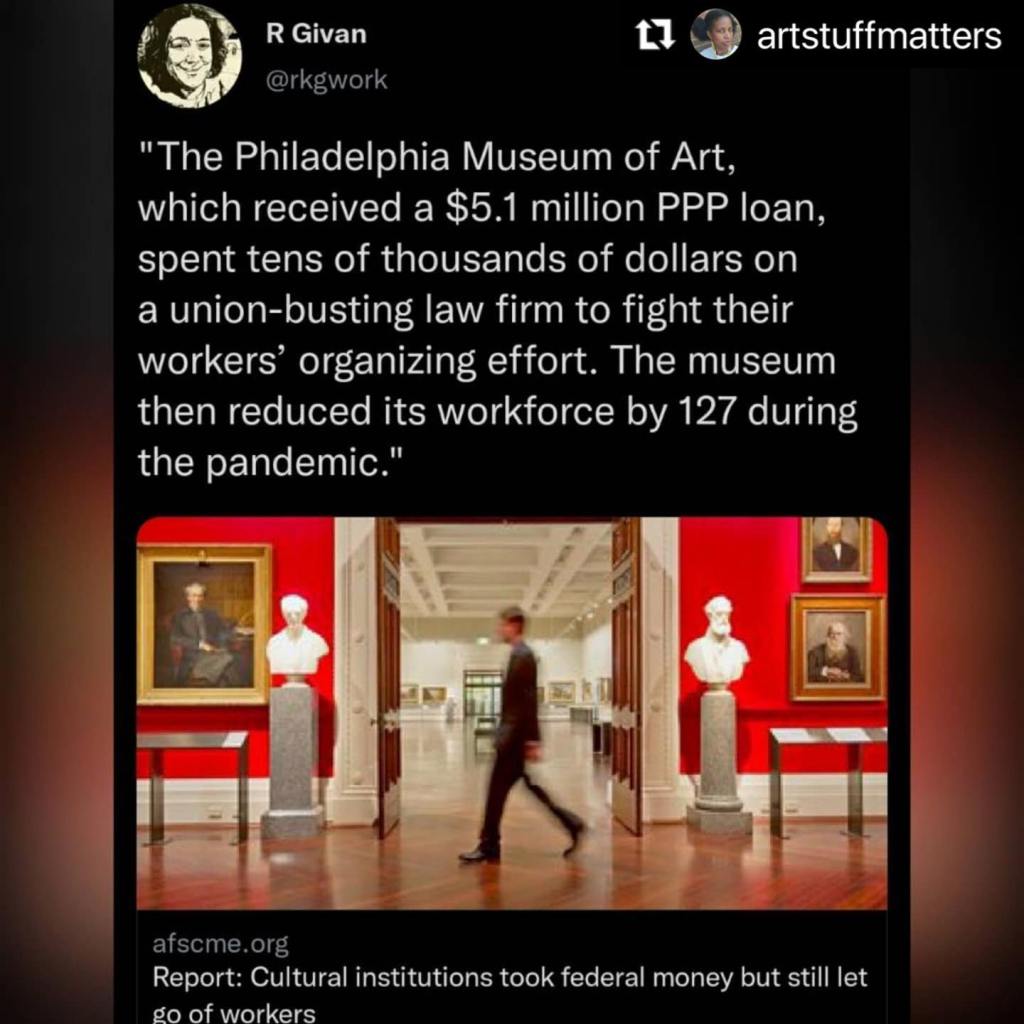
Report: Cultural Institutions took federal money but still let go of workers
|
Read more: Report: Cultural Institutions took federal money but still let go of workersThe Philadelphia Museum of Art, which received a $5.1 million PPP loan, spent tens of thousands of dollars on a union-busting law firm to fight their workers’ organizing effort. The museum then reduced its workforce by 127 during…
-
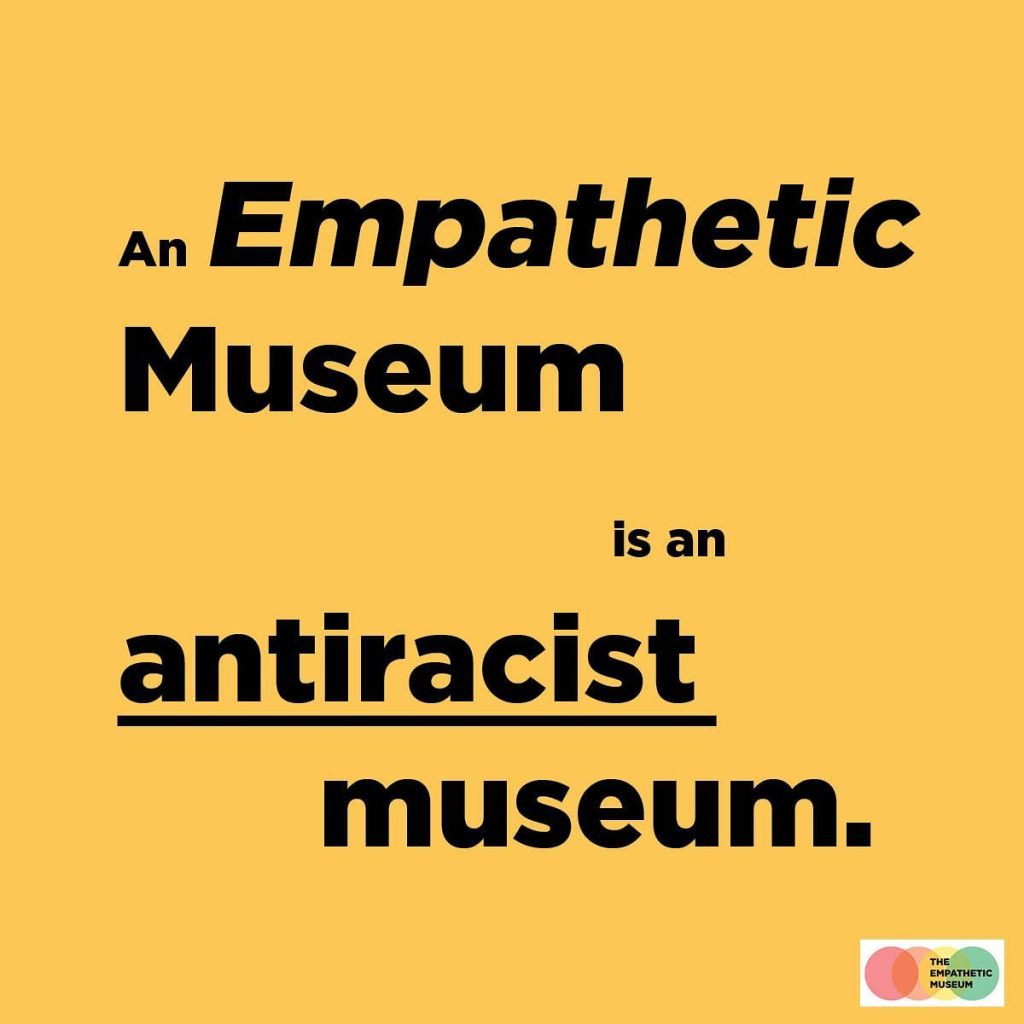
An Empathetic Museum is an Antiracist Museum
|
Read more: An Empathetic Museum is an Antiracist MuseumIn our most recent blogpost, “An Empathetic Museum is an Antiracist Museum”, we explore what it means to be both empathetic and antiracist within our institutions. Our call to action: we need more empathy, not less. Empathy leads…
-
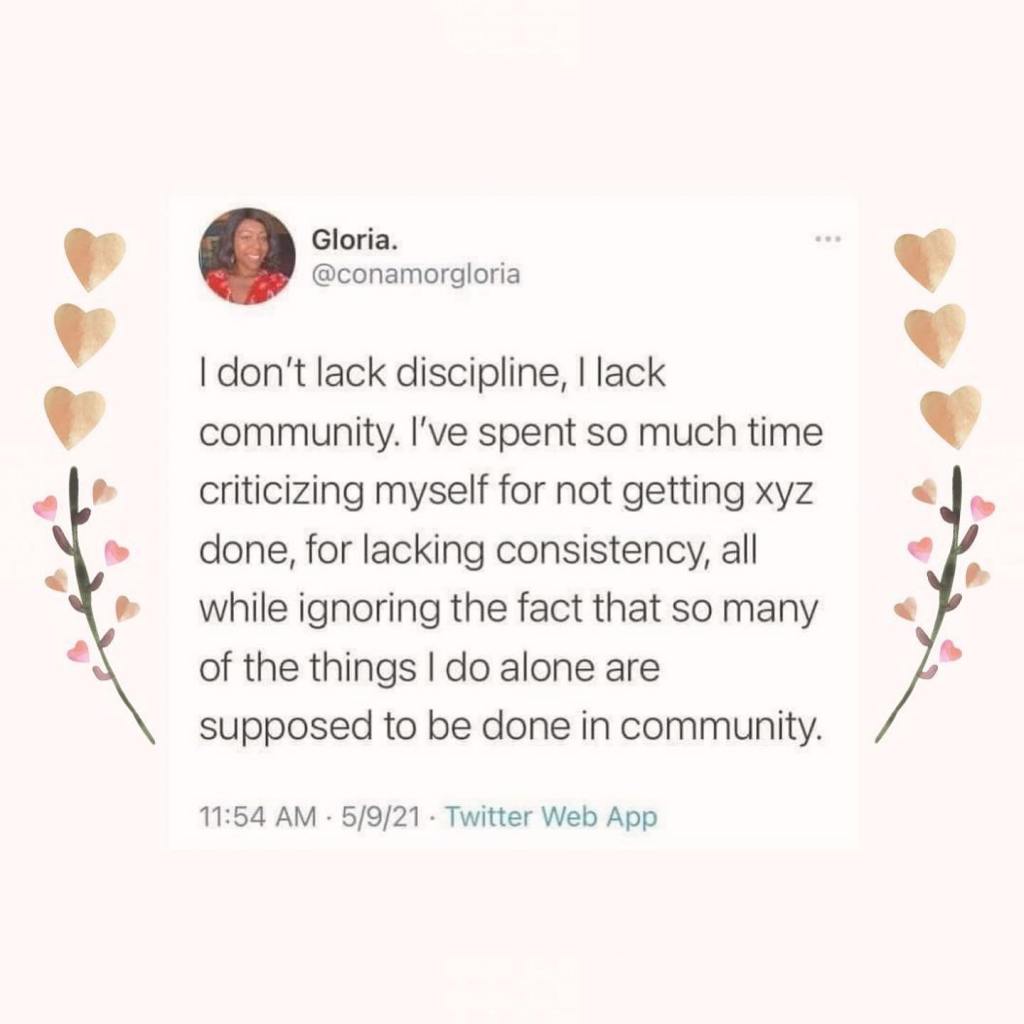
Trusting Community
|
Read more: Trusting CommunityWhat would have to change to make our workplace feel like a trusting community?
-

The Importance of Community
|
Read more: The Importance of CommunityWho are your communities? Where do you find your biggest sense of belonging? Reposted from @siguele.cabron.
-

Can Museums Be Empathetic? Yes
|
Read more: Can Museums Be Empathetic? YesIn response to our last post, check out Gretchen Jennings “Can Museums Be Empathetic? Yes” in Museum Commons.
-

Can Institutions be Empathetic?
|
Read more: Can Institutions be Empathetic?Our very organizational structure prohibits diversity, and that in order to embrace true diversity we have to change our organizations at their core. The aspects of traditional organizational culture (not just in museums) that prohibit diversity include things…
-

Companies Are Embracing Empathy to Keep Employees Happy. It’s Not That Easy
|
Read more: Companies Are Embracing Empathy to Keep Employees Happy. It’s Not That EasySo long as organizations view employees with different needs as sources of friction, and solutions to those needs as examples of unfairness, they will continue to promote and retain employees with the capacity to make their personalities, needs…
-

Confronting Our Whiteness: Our First Steps Towards Systemic Change
|
Read more: Confronting Our Whiteness: Our First Steps Towards Systemic ChangeArticle by Stacey Mann, learning experience designer and interpretive strategist, Saralyn Rosenfield, Director of Learning & Engagement, Delaware Art Museum, and Amelia Wiggins, Manager of Gallery Learning & Interpretation, Delaware Art Museum. Building institutional empathy can strengthen inclusive…
 The Empathetic Museum